




Delighted Alternatives in 2026: 9 Best Replacements for NPS & Customer Feedback Programs

Delighted is being retired, and while many customers are being directed toward Qualtrics, not every organization needs an enterprise experience management platform. Many teams are using this transition to evaluate alternatives that offer faster implementation, lower costs, AI-powered insights, and stronger day-to-day usability. This guide compares the best Delighted alternatives for NPS, customer feedback, and customer experience programs based on pricing, capabilities, and business needs.
Request a Demo
For years, Delighted became one of the most popular tools for running NPS, CSAT, CES, and customer feedback programs.
Teams loved it because it was easy to launch, simple to use, affordable, and focused on feedback collection.
But things have changed.
With Delighted being retired and customers being moved toward Qualtrics, many organizations are now evaluating their next step.
The challenge isn’t simply replacing surveys.
Most teams need to preserve:
- NPS history
- Survey automation
- Customer data integrations
- Dashboards and reporting
- Team workflows
- Service recovery processes
Some organizations will move directly to Qualtrics.
Others are using this opportunity to evaluate whether they need a broader customer experience platform, a simpler NPS tool, or something in between.
In this guide, we’ll compare the best Delighted alternatives based on pricing, implementation effort, analytics capabilities, and long-term CX requirements.
Comparison: Best Delighted Alternatives in 2026
| Tool | Best For | Why Teams Choose It Over Delighted | Company Size | Pricing |
| SurveySensum | AI-enabled CX & NPS programs | AI analytics, root-cause detection, omnichannel feedback, action management, SensAI chat-based engine | Mid-market to Enterprise | Starts at $3,600/year |
| AskNicely | Frontline service businesses | Coaching workflows, employee adoption, service-focused CX | Mid-market to Enterprise | Typically starts around ~$5K–10K/year |
| Retently | Lightweight NPS programs | Similar simplicity to Delighted with transparent pricing | SMB to Mid-market | Starts at $99/month |
| SurveySparrow | Customer feedback programs | Conversational surveys, recurring NPS, easier deployment | SMB to Mid-market | Typically ~$3K-5K/year |
| Zonka Feedback | Operational feedback programs | QR surveys, service recovery, faster rollout | SMB to Mid-market | Typically ~$3K-5K/year |
| CustomerGauge | B2B account experience | Account-level NPS, retention and revenue insights | Mid-market to Enterprise | Custom |
| Qualtrics | Enterprise experience management | Advanced governance, analytics, global deployments | Enterprise | Enterprise pricing (~$100K-1M+) |
| Medallia | Global CX programs | Large-scale CX orchestration and journey management | Enterprise | Enterprise pricing (~$100K-1M+) |
| InMoment | Mature enterprise CX teams | Enterprise analytics, omnichannel insights, reputation management | Enterprise | Upper enterprise pricing (~70% of Qualtrics pricing) |
Which Delighted Alternative Is Best For You?
| If You Want To… | Recommended Platform |
| Stay close to Delighted’s simplicity | Retently |
| Upgrade to an AI-enabled CX & NPS platform | SurveySensum |
| Improve frontline coaching | AskNicely |
| Run recurring feedback programs | SurveySparrow |
| Launch operational feedback quickly | Zonka Feedback |
| Manage B2B account relationships | CustomerGauge |
| Move into enterprise experience management | Qualtrics |
| Run global CX programs | Medallia |
| Need enterprise analytics and insights | InMoment |
Why Teams Are Looking Beyond Delighted
1. Delighted Is Being Retired
The biggest reason is simple.
Organizations need a replacement.
With Delighted being phased out, teams must identify a new platform, migrate historical data, and rebuild reporting before the transition is complete.
For organizations that rely on NPS and customer feedback to drive business decisions, delaying the migration can create unnecessary disruption.
Looking for alternatives to another retiring feedback platform? See our guide to the best GetFeedback alternatives →
2. Not Every Team Wants Qualtrics
Qualtrics is one of the most powerful experience management platforms available today.
But many Delighted customers originally chose Delighted because it was simple.
They wanted:
- Quick setup
- Easy survey management
- Fast reporting
- Low administrative overhead
Moving directly from Delighted to Qualtrics can feel like a significant jump in complexity, implementation effort, and cost.
As a result, many teams are evaluating alternatives before committing to a migration path.
3. Customer Expectations Have Changed
When Delighted launched, collecting feedback was enough.
Today, organizations expect platforms to help them:
- Understand why scores change
- Automatically analyze comments
- Detect emerging trends
- Identify root causes
- Prioritize actions
- Close the loop with customers
For many teams, this migration is becoming an opportunity to upgrade rather than simply replace.
For many organizations, the real decision isn’t where to move from Delighted. It’s what kind of customer feedback program they want to build next →
Why Some Delighted Customers Are Exploring Alternatives Before Moving to Qualtrics
Common concerns include:
- Higher platform costs
- Longer implementation cycles
- More administration overhead
- Features they may never use
- Additional training requirements
This doesn’t attack Qualtrics. It simply reflects the reality that many Delighted users originally chose simplicity over enterprise complexity.
What Modern CX Teams are looking for in a Delighted Replacement
Most Delighted customers are not looking for more survey types.
They’re looking for a better way to understand feedback, identify issues faster, and drive action across the business.
1. Collect Feedback Wherever Customers Prefer
Email surveys are still important, but they’re no longer enough on their own. Modern feedback programs collect responses through Email, SMS, WhatsApp, QR Codes, Website Surveys, and In-App Surveys to improve reach, increase response rates, and capture feedback across the customer journey.
2. Understand Why Scores Change
Most teams don’t struggle to collect NPS scores. They struggle to understand what caused those scores. Modern platforms increasingly use AI Text Analytics, Sentiment Analysis, Theme Detection, Driver Analysis, Root Cause Analysis, and AI-Powered Summaries to automatically surface trends and identify the factors influencing customer satisfaction.
3. Move Beyond Dashboards
Collecting feedback is only the first step. The real value comes when teams can take action. Features such as Closed-Loop Workflows, Service Recovery Alerts, Case Management, Ticketing, Ownership Assignment, and Action Planning help organizations respond faster and improve customer outcomes.
4. Connect Feedback to Business Outcomes
Customer feedback becomes significantly more valuable when it can be tied to business performance. Features like Role-Based Dashboards, Customer Segmentation, Journey Analytics, Revenue Attribution, and Trend Reporting help teams understand the impact of customer experience on retention, loyalty, and growth.
5. Choose a Platform Your Team Can Actually Use
The most powerful platform isn’t always the best fit. Many Delighted users originally chose it because it was simple. The right replacement should balance capabilities such as NPS, CSAT, CES, AI Analytics, Integrations, Automation, and Reporting with ease of implementation, usability, and long-term scalability.
The Best Delighted Alternatives in 2026
🟢 Best Delighted Alternatives for Growing CX Teams
(For teams looking to move beyond survey collection and drive action)
1. SurveySensum
Best for: Mid-market and enterprise teams looking for an action-oriented customer feedback platform that goes beyond NPS measurement and helps teams operationalize customer experience.
Why teams choose it: Many organizations moving away from Delighted are not looking for another survey tool. They’re looking for a platform that helps them understand why scores change, identify root causes automatically, and drive action across support, operations, product, and leadership teams. SurveySensum is particularly popular with teams that want enterprise-grade capabilities without enterprise-level complexity or pricing.
Key features:
- NPS, CSAT, CES, PMF, onboarding, support, and relationship surveys
- AI-powered text analytics tool
- Email, SMS, WhatsApp, QR, website, and in-app surveys
- Role-based dashboards
- Closed-loop ticketing system
- SensAI chat-based engine for instant insight generation
- Driver analysis and root cause detection
When not to use it: If you need highly specialized enterprise governance layers, complex XM administration structures, or a platform designed primarily for large global experience management programs.
Pricing: Starts at $3,600/year
When to choose it: Choose SurveySensum if you want to move beyond survey collection and build a customer feedback program that drives measurable business outcomes.
2. AskNicely
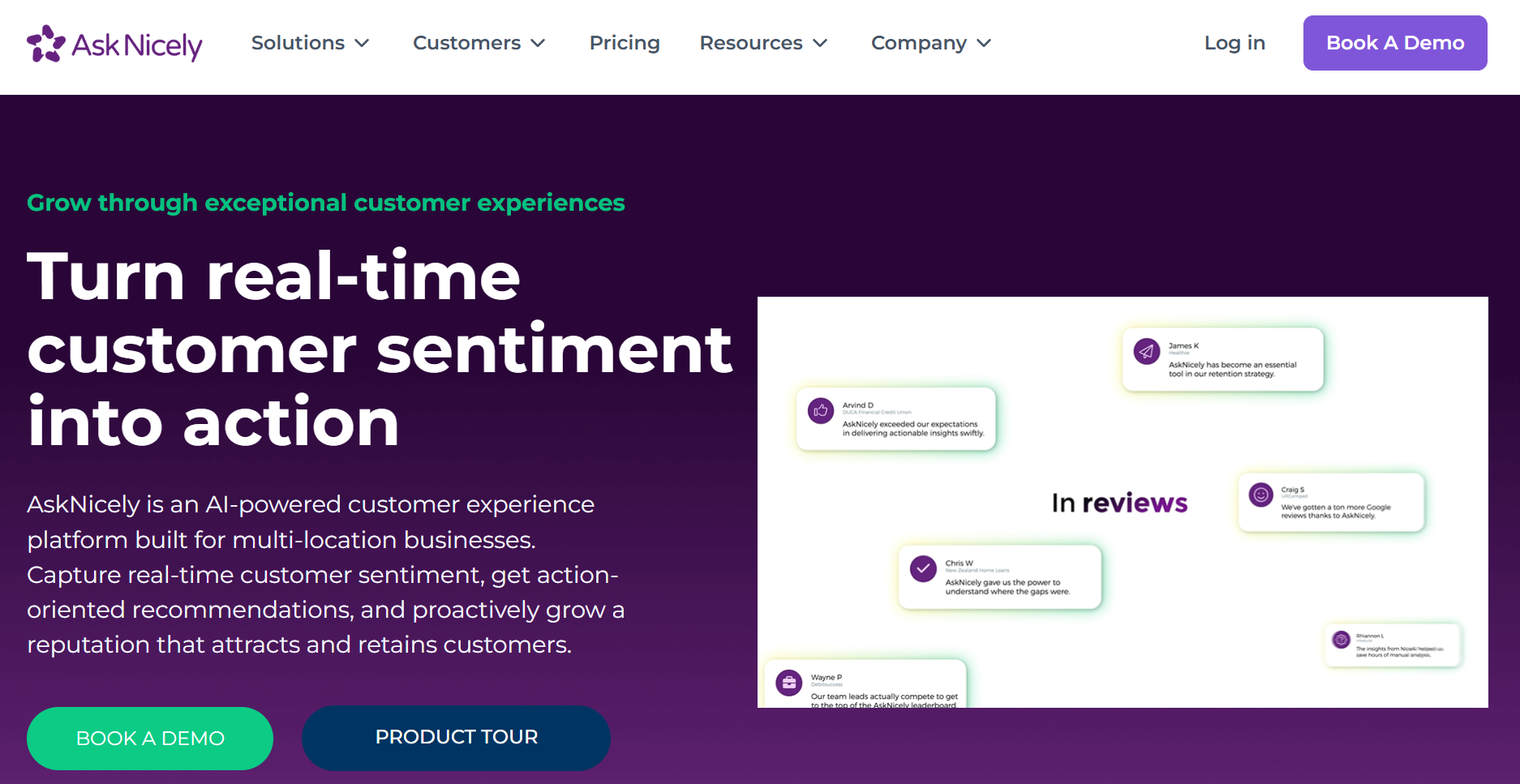
Best for: Service businesses, franchise brands, healthcare organizations, home services companies, and frontline-driven CX teams.
Why teams choose it: AskNicely has built its reputation around frontline employee engagement and coaching. Teams often choose it when their goal is not just measuring NPS but helping employees improve customer interactions through daily feedback loops and coaching workflows.
Key features:
- NPS, CSAT, and CES surveys
- Employee coaching workflows
- Frontline performance scorecards
- Multi-location reporting
- Service recovery alerts
- Team leader dashboards
- Integrations with Salesforce and CRM systems
When not to use it: If you’re looking for deep AI analytics, sophisticated root-cause analysis, advanced text analytics, or broader enterprise-wide customer experience orchestration.
Pricing: Custom pricing, typically estimated between $5,000-$10,000+ annually depending on users and locations.
When to choose it: Choose AskNicely if customer experience in your organization is heavily driven by frontline employees and local managers.
→ Wondering how AskNicely compares with other frontline-focused CX platforms? See where it stands against leading AskNicely alternatives.
3. Retently
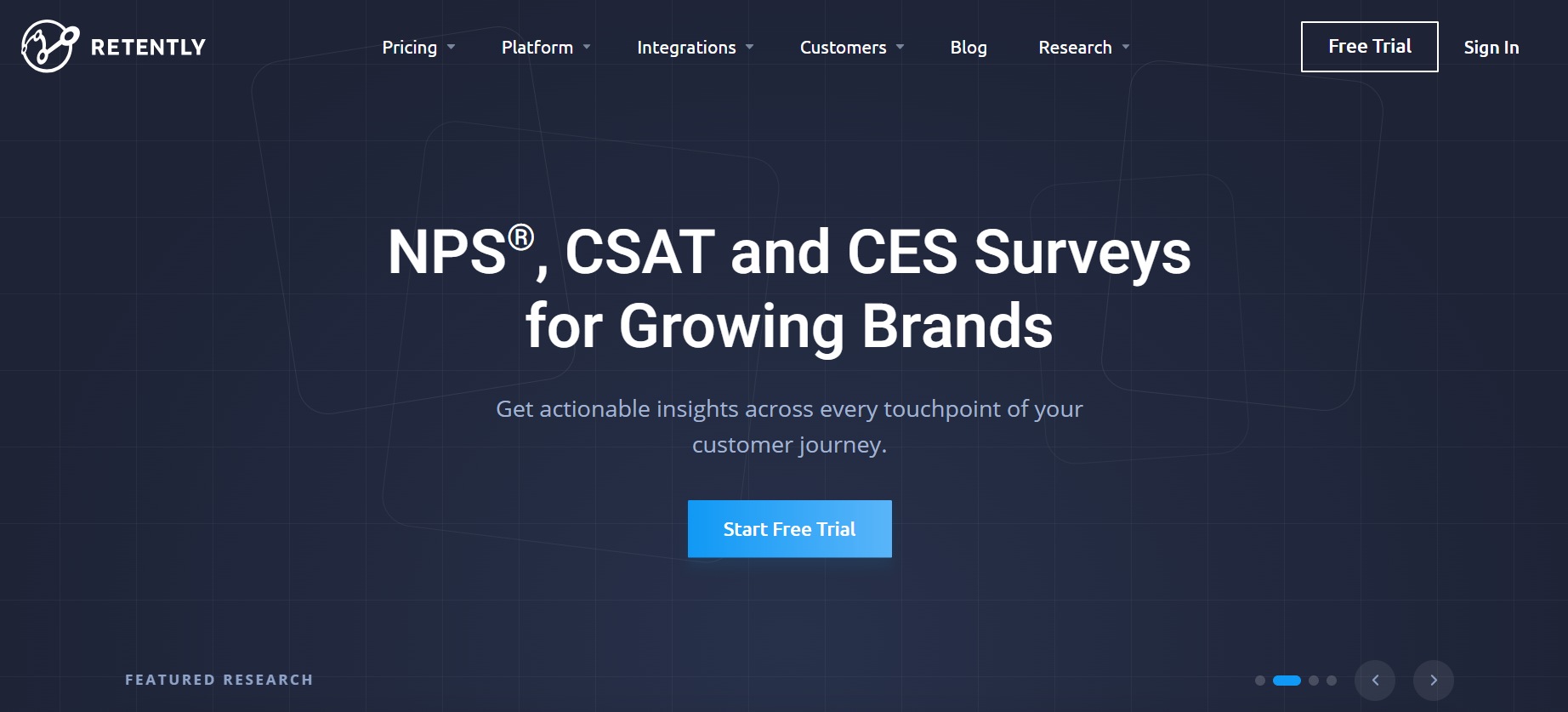
Best for: Growing SaaS companies, ecommerce brands, and businesses looking for a lightweight NPS platform.
Why teams choose it: Retently appeals to teams that want structured NPS, CSAT, and CES measurement without investing in a larger customer experience platform. It offers straightforward implementation, transparent pricing, and enough analytics for most growing businesses.
Key features:
- NPS, CSAT, and CES programs
- Email and web surveys
- Customer segmentation
- Automated survey scheduling
- Basic sentiment and trend reporting
- Customer journey tracking
- API and CRM integrations
When not to use it: If you need omnichannel feedback collection, advanced AI analytics, service recovery workflows, or enterprise-grade action management.
Pricing: Starts at $99/month, with advanced plans ranging into several hundred dollars per month.
When to choose it: Choose Retently if your primary goal is running structured NPS and customer feedback programs with minimal setup and predictable costs.
🔵 Enterprise Experience Platforms
4. Qualtrics
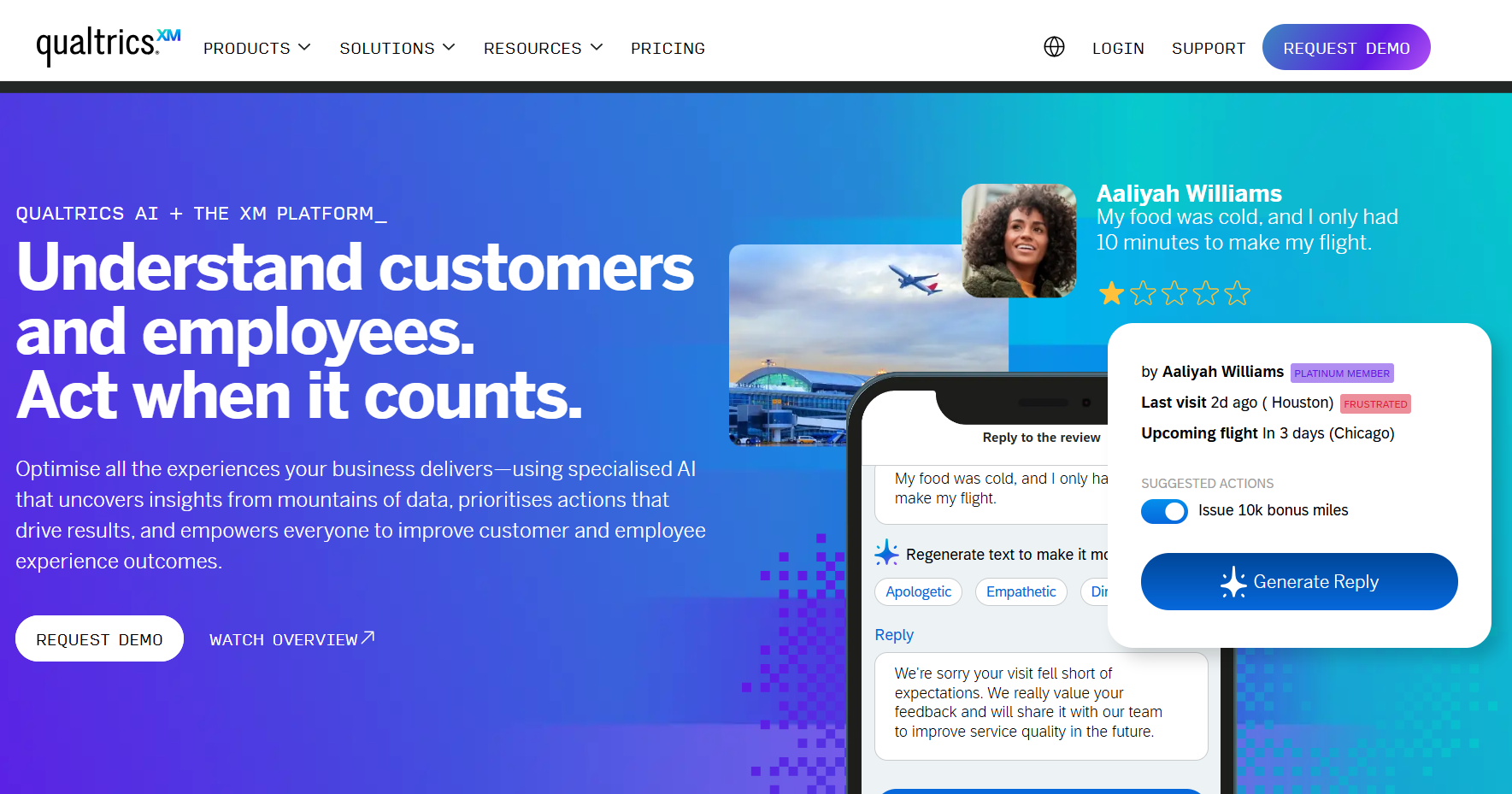
Best for: Large enterprises running global customer, employee, brand, and market research programs.
Why teams choose it: Qualtrics is often selected when organizations need deep governance, advanced analytics, extensive customization, and enterprise-wide experience management capabilities across multiple business units and countries.
Key features:
- Customer, employee, product, and brand experience management
- Advanced text analytics tools
- Predictive intelligence and AI
- Complex workflow automation
- Enterprise governance controls
- Multi-country deployments
- Extensive integration ecosystem
- Advanced reporting and dashboards
When not to use it: If you have a small CX team, limited implementation resources, or primarily need NPS, CSAT, and customer feedback management.
Pricing: Typically starts around $100,000/year and can exceed $500,000–$1M+ annually for global deployments.
When to choose it: Choose Qualtrics if you have dedicated CX resources and need a platform capable of supporting complex enterprise experience management programs.
→ Not sure if your team actually needs Qualtrics-level complexity? Compare the best Qualtrics alternatives for growing CX teams.
5. Medallia
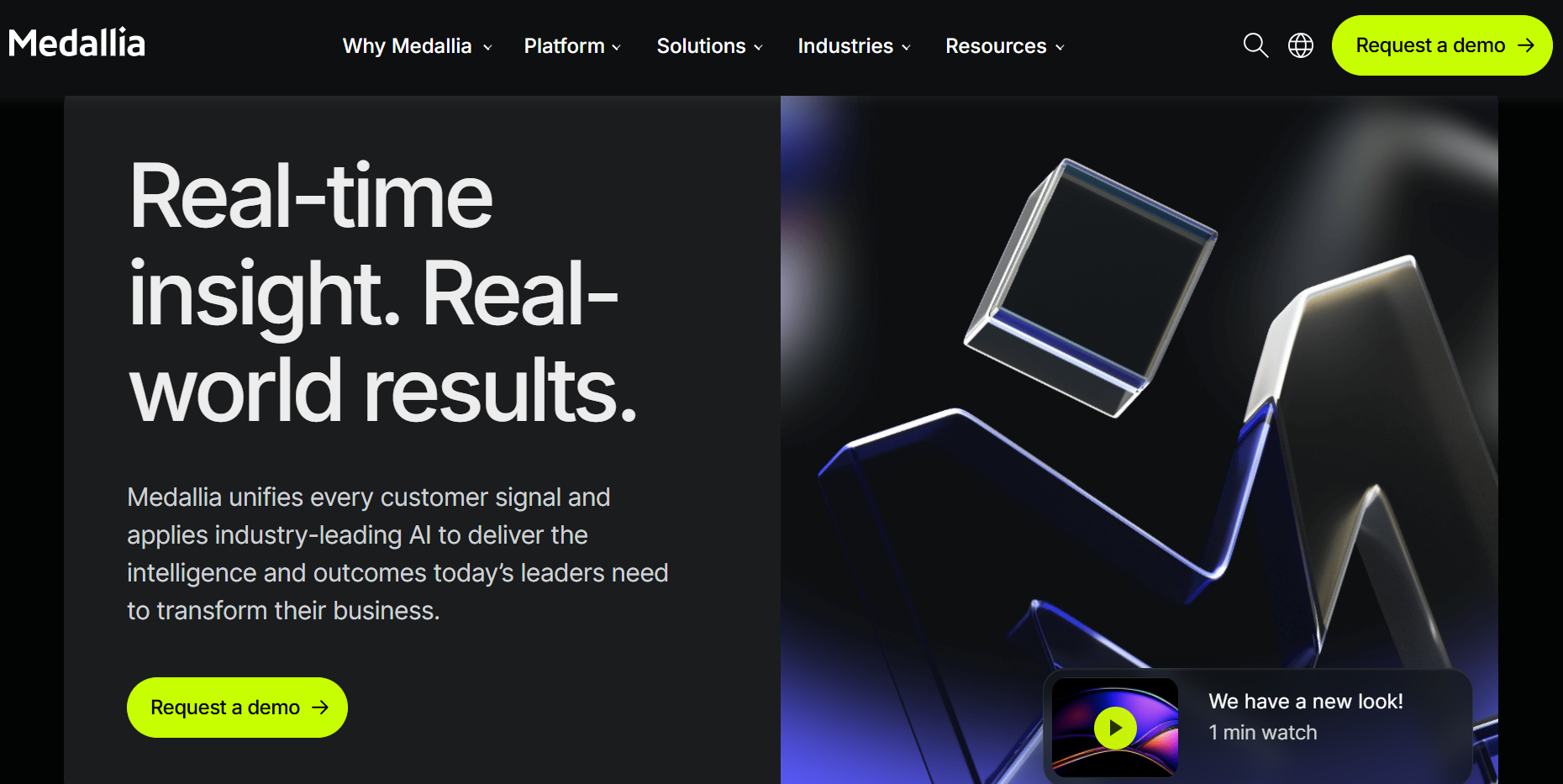
Best for: Large enterprises running sophisticated multi-country customer experience programs.
Why teams choose it: Medallia is often chosen by organizations looking for enterprise-scale customer experience management, advanced operational insights, and the ability to connect feedback with operational data across departments.
Key features:
- Enterprise CX management
- Advanced text analytics
- Omnichannel feedback collection
- Operational data integration
- Service recovery workflows
- Journey analytics
- Predictive intelligence
- Enterprise dashboards
When not to use it: If implementation speed, simplicity, or budget are major priorities. Medallia is designed for organizations with mature CX functions and substantial resources.
Pricing: Typically starts at $100,000+ annually and can scale significantly higher.
When to choose it: Choose Medallia if you’re managing a large-scale enterprise CX transformation across multiple countries and business units.
→ Evaluating Medallia alongside other enterprise CX platforms? Here’s how the top Medallia alternatives compare on pricing, implementation, and usability.
6. InMoment
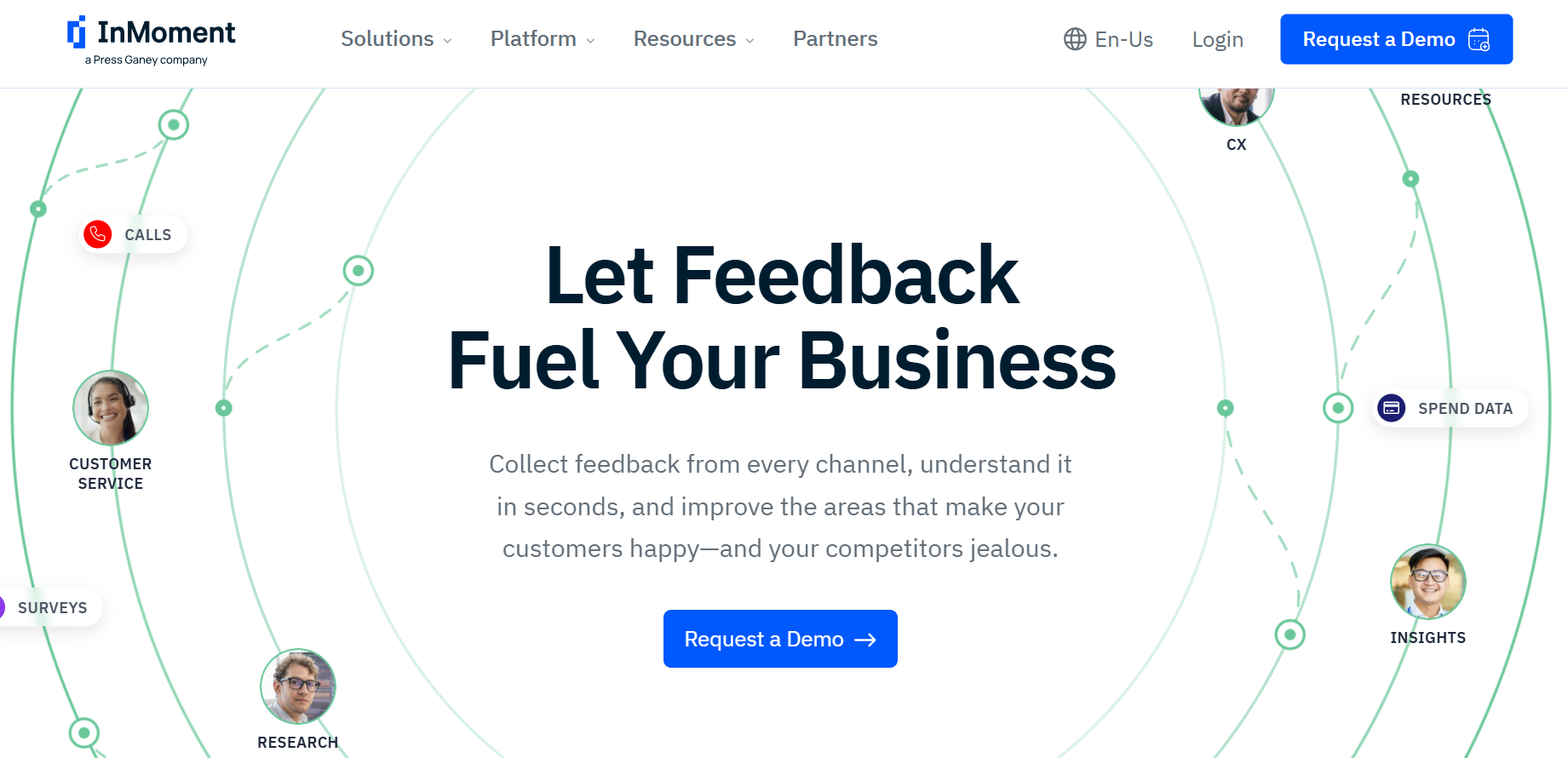
Best for: Mature customer experience teams that need enterprise-grade analytics without necessarily adopting Qualtrics or Medallia.
Why teams choose it: InMoment combines customer feedback, reputation management, employee experience, and advanced analytics into a single platform. It appeals to organizations that want enterprise capabilities with a strong focus on insight generation.
Key features:
- NPS, CSAT, and CES programs
- AI-powered text analytics
- Omnichannel listening
- Reputation management
- Journey analytics
- Advanced reporting
- Action planning workflows
When not to use it: If you need a lightweight platform that can be launched quickly with minimal resources.
Pricing: Upper enterprise pricing (~70% of Qualtrics pricing)
When to choose it: Choose InMoment if your team has outgrown basic feedback tools and needs stronger analytics and enterprise capabilities.
→ InMoment is only one of several enterprise CX platforms worth considering. Compare it against the leading InMoment alternatives.
Some teams need enterprise-scale CX programs. Others simply need a platform their teams can launch, adopt, and use consistently. See How Modern CX Platforms Compare →
🟣 B2B Account Experience Platforms
7. CustomerGauge
Best for: B2B organizations focused on account-level customer experience and retention.
Why teams choose it: CustomerGauge is built specifically for B2B environments where customer relationships exist at the account level rather than the individual respondent level. It helps organizations connect NPS directly to revenue, renewals, and account growth.
Key features:
- Account-level NPS
- Revenue and retention analytics
- Relationship surveys
- Customer health tracking
- Executive dashboards
- CRM integrations
- Account hierarchy reporting
When not to use it: If your business is primarily B2C or focused on high-volume transactional feedback.
Pricing: Enterprise B2B pricing based on accounts, integrations, and journey complexity
When to choose it: Choose CustomerGauge if your primary objective is improving retention, expansion, and account growth through customer feedback.
→ CustomerGauge is built specifically for B2B account experience, but it’s worth comparing against other CustomerGauge alternatives before committing.
🟡 Customer Feedback Understanding Platforms
8. SurveySparrow
Best for: SME and mid-market CX teams looking for a modern survey experience.
Why teams choose it: SurveySparrow is known for conversational surveys, ease of use, and recurring feedback programs. Many teams choose it when moving beyond basic survey tools but before investing in enterprise CX platforms.
Key features:
- Conversational surveys
- NPS, CSAT, CES
- Email and web surveys
- Recurring surveys
- Basic workflow automation
- Ticketing integration
- Reputation management
When not to use it: If you need advanced action management, enterprise governance, or sophisticated AI-powered insight generation.
Pricing: Typically starts around $3,000-$5,000 annually.
When to choose it: Choose SurveySparrow if ease of use and quick deployment are more important than advanced enterprise capabilities.
→ SurveySparrow is popular among growing CX teams, but it’s not the only option. Compare the top SurveySparrow alternatives before deciding.
9. Zonka Feedback
Best for: Retail brands, healthcare providers, hospitality businesses, and operational feedback programs.
Why teams choose it: Zonka is often selected by teams that want multi-channel feedback collection, QR-based surveys, and service recovery capabilities without enterprise pricing.
Key features:
- NPS, CSAT, CES
- QR code surveys
- Kiosk surveys
- Email and SMS surveys
- Real-time alerts
- Basic analytics
- Customer recovery workflows
When not to use it: If you’re running large-scale enterprise CX programs that require advanced analytics, governance, and complex workflows.
Pricing: Typically starts around $3,000-$5,000 annually.
When to choose it: Choose Zonka if you’re focused on operational feedback and need an affordable platform with faster implementation.
Should You Move From Delighted to Qualtrics?
The answer depends on your CX maturity.
Move to Qualtrics If:
- You’re a large enterprise
- You operate across multiple countries
- You have dedicated CX teams
- Budget is not a major constraint
- You need advanced governance and controls
Consider Alternatives If:
- Your team is small or mid-sized
- You want faster implementation
- You want lower operational complexity
- You mainly run NPS, CSAT, and CES programs
- You want stronger day-to-day usability
For many Delighted customers, Qualtrics is not the only path forward.
If you’re evaluating Qualtrics as your next platform, it’s worth understanding how it compares with other customer experience tools before making a decision. Compare the Best Qualtrics Alternatives →
How Difficult is it to Migrate From Delighted?
Migration effort depends on how deeply Delighted is embedded in your processes.
Typical Migration Timeline
| Program Size | Timeline |
| Basic NPS Program | 1–2 weeks |
| Mid-Market CX Program | 2–4 weeks |
| Enterprise Program | 1–3 months |
Key Migration Tasks
- Export historical responses
- Rebuild automations
- Recreate dashboards
- Configure integrations
- Train teams
Most migrations are less about moving surveys and more about rebuilding the workflows that sit around them →
Frequently Asked Questions
Is Delighted shutting down?
Yes. Delighted is being retired, and many customers are being directed toward Qualtrics.
What is replacing Delighted?
Qualtrics is the primary migration destination, though many organizations are evaluating alternatives such as SurveySensum, AskNicely, Retently, SurveySparrow, and Medallia.
Can I migrate historical NPS data from Delighted?
Yes. Most customer feedback platforms support importing historical survey data.
Is Qualtrics the best Delighted alternative?
For large enterprises, Qualtrics may be a strong fit. For many growing teams, simpler alternatives often provide faster implementation and lower operational overhead.
Which Delighted alternative is best for NPS?
SurveySensum, Retently, AskNicely, CustomerGauge, and Qualtrics are among the strongest options depending on your requirements.
Final Thoughts
Delighted’s retirement isn’t just a software change.
It’s an opportunity to rethink how customer feedback is collected, analyzed, and acted upon.
Some organizations will move directly to Qualtrics.
Others will use the transition to improve response rates, automate analysis, strengthen service recovery, and build a more actionable customer experience program.
The right choice depends on where your CX program is today and where you want it to be over the next few years.
Delighted may be going away, but it’s also an opportunity to build a feedback program that’s easier to scale, easier to adopt, and easier to act on.
If you’ve narrowed your shortlist down to a few platforms, seeing how they compare in a real customer feedback environment usually makes the decision much easier. See SurveySensum in Action→
Free Forever • No Feature Limitation • No Credit Card Required • Sign Up For Free 


Increase ROI by 3x with targeted feedback & analysis
Boost Customer Satisfaction by up to 20%
Reduce Churn by identifying pain points in real time
See it in Action
Contents
How much did you enjoy this article?